When Do Kids Need Braces? Early Orthodontic Warning Signs
Many parents assume children only need braces once they reach their teenage years. However, orthodontic problems can begin developing much earlier, sometimes before all permanent teeth have erupted. Identifying these concerns early can help families understand their child’s dental development and determine whether orthodontic treatment may be necessary.
For parents searching for a pediatric dentist in Rancho Cucamonga, CA, understanding the early warning signs of orthodontic problems can make a meaningful difference in their child’s oral health.
While not every child needs braces, early orthodontic evaluations can identify crowding, bite problems, jaw development concerns, and other issues that may benefit from monitoring or treatment.
At What Age Should Children First See an Orthodontist?
The American Association of Orthodontists recommends that children receive their first orthodontic evaluation by age seven.
At this age, most children have a combination of baby teeth and permanent teeth. This developmental stage allows orthodontists to evaluate emerging bite patterns, jaw growth, and available space for permanent teeth.
An early evaluation does not automatically mean your child needs braces.
In fact, many children simply require periodic monitoring until their permanent teeth develop further.
A pediatric dentist can identify potential alignment concerns during routine examinations and recommend an orthodontic consultation when appropriate.
For Rancho Cucamonga families, early evaluations offer an opportunity to understand potential orthodontic needs before more complicated problems develop.
7 Early Signs Your Child May Need Braces
Parents often notice changes in their children’s smiles before recognizing that those changes may indicate an orthodontic concern.
Here are seven common warning signs worth discussing with a dental professional.
1. Crowded or Overlapping Teeth
Crowding occurs when the jaw does not provide enough space for teeth to align properly.
Children with crowded teeth may have overlapping, twisted, or unusually positioned teeth.
Crowding can also make brushing and flossing more difficult, increasing the likelihood of plaque accumulation and cavities.
A pediatric dentist can evaluate whether the crowding is part of normal dental development or requires orthodontic attention.
2. Large Gaps Between Teeth
Some spacing between baby teeth is normal and can provide room for larger permanent teeth.
However, unusually large gaps or persistent spacing concerns may warrant an evaluation.
Spacing can result from differences between tooth size and jaw size, missing teeth, or certain oral habits.
Not every gap requires treatment, so a professional examination is essential.
3. Difficulty Biting or Chewing
Children should generally be able to bite and chew comfortably.
If your child frequently struggles to bite into food, avoids chewing on one side, or complains that their teeth do not fit together properly, a bite problem may be present.
An orthodontic evaluation can help identify whether tooth alignment or jaw positioning contributes to the difficulty.
4. An Overbite or Underbite
An overbite involves excessive vertical overlap of the upper front teeth over the lower front teeth.
An underbite occurs when the lower front teeth sit ahead of the upper front teeth when the mouth closes.
These bite relationships can vary in severity.
Some children may benefit from early intervention, while others can wait until additional permanent teeth erupt.
5. Mouth Breathing
Frequent mouth breathing can sometimes accompany airway or nasal obstruction concerns and may be associated with certain dental and facial growth patterns.
However, mouth breathing alone does not mean a child needs braces.
Parents who notice persistent mouth breathing should discuss it with their child’s healthcare provider. A pediatric dentist may also assess dental development and recommend additional evaluation when appropriate.
6. Early or Late Loss of Baby Teeth
Baby teeth help maintain space for permanent teeth.
When a baby tooth falls out significantly earlier than expected, neighboring teeth may shift into the available space.
Delayed loss of baby teeth can also affect how permanent teeth emerge.
A children’s dentist in Rancho Cucamonga can monitor eruption patterns and determine whether space management or orthodontic evaluation is necessary.
7. Jaw Shifting or an Uneven Bite
Some children shift their lower jaw to one side when closing their mouths.
This movement may indicate a bite interference or crossbite.
A crossbite occurs when certain upper teeth close inside the corresponding lower teeth rather than outside them.
Because some crossbites can influence jaw function and development, early assessment may be beneficial.
What Is Phase 1 Orthodontic Treatment?
Phase 1 orthodontic treatment, also called interceptive orthodontics, begins while children still have a combination of baby and permanent teeth.
Treatment typically occurs during the early mixed-dentition years, although the exact timing depends on the child’s development.
The goal is to address specific orthodontic problems that may benefit from treatment before all permanent teeth emerge.
Depending on the diagnosis, treatment may involve expanders, limited braces, or other orthodontic appliances.
Not every child needs Phase 1 treatment.
Orthodontists generally recommend early intervention when they identify a clear clinical benefit, such as correcting certain crossbites or addressing specific space and eruption problems.
Some children who receive early treatment still need comprehensive orthodontic treatment later.
Can Pediatric Dentists Tell if a Child Will Need Braces?
Pediatric dentists regularly monitor children’s dental growth and development.
During routine appointments, they evaluate tooth eruption, jaw relationships, bite alignment, and spacing.
They may identify warning signs that suggest a child could benefit from an orthodontic consultation.
However, predicting whether a child will eventually need braces is not always possible during early childhood.
Jaw growth, tooth eruption, and other developmental changes can influence future orthodontic needs.
Regular pediatric dental examinations help track these changes over time.
Are Braces or Clear Aligners Better for Children?
Parents often ask whether traditional braces or clear aligners provide better results.
The answer depends on the child’s orthodontic condition, dental development, and ability to follow treatment instructions.
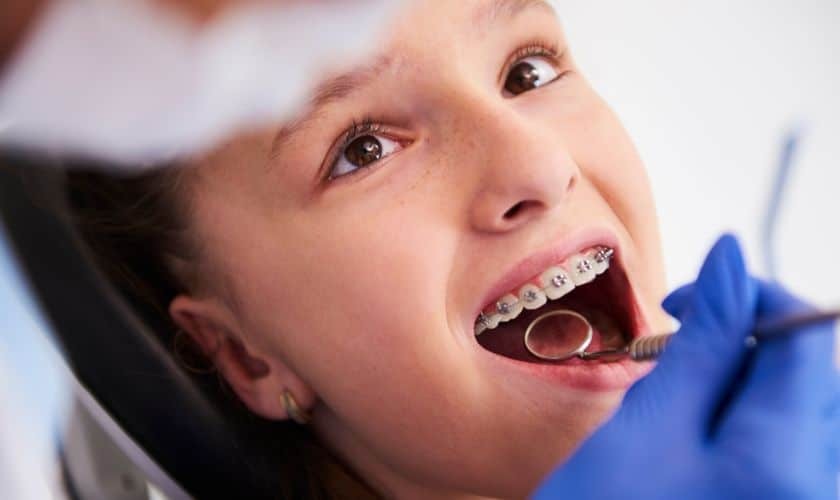
Traditional braces use brackets and wires to move teeth into better positions. They remain attached throughout treatment, which eliminates the need for children to remember to wear removable appliances.
Clear aligners use a series of removable trays to gradually move teeth.
Aligners may work well for certain children and teenagers, but successful treatment requires consistent wear and careful handling.
Some complex orthodontic problems may be better suited to braces or other appliances.
An orthodontist can recommend the most appropriate option after evaluating the child’s teeth, bite, and treatment goals.
How Parents Can Support Healthy Dental Development
Parents can take several practical steps to support their children’s oral health and dental development.
- Schedule regular pediatric dental checkups.
- Encourage twice-daily brushing with fluoride toothpaste.
- Help children floss between teeth that touch.
- Monitor prolonged thumb-sucking or pacifier habits.
- Address dental injuries promptly.
- Ask about unusual tooth eruption patterns.
- Discuss chewing difficulties or bite concerns with a dentist.
- Schedule an orthodontic evaluation by age seven.
Children who participate in contact sports should also wear appropriate mouthguards to reduce the risk of dental injuries.
These preventive habits support healthy teeth and help dental professionals identify concerns as children grow.
What Happens During a Child’s First Orthodontic Evaluation?
A child’s first orthodontic evaluation typically begins with a review of dental history and an examination of the teeth and jaws.
The orthodontist assesses how the upper and lower teeth fit together, evaluates available space, and looks for developing alignment problems.
Depending on the findings, the orthodontist may recommend diagnostic photographs, dental scans, or dental X-rays.
After the evaluation, parents generally receive one of three recommendations.
The child may not need orthodontic treatment, may benefit from periodic monitoring, or may have a condition that warrants earlier treatment.
Families should feel comfortable asking questions about the diagnosis, treatment alternatives, expected duration, and potential costs.
Finding a Pediatric Dentist in Rancho Cucamonga, CA
Choosing a pediatric dentist who monitors dental development can help parents stay informed about their child’s changing smile.
Families throughout Rancho Cucamonga, Alta Loma, Etiwanda, Victoria Gardens, and surrounding communities can benefit from regular preventive dental care and timely orthodontic referrals.
When selecting a pediatric dental practice, parents should look for a team that emphasizes preventive care, patient education, and age-appropriate treatment.
A pediatric dentist can explain normal tooth eruption patterns, identify potential concerns, and coordinate with orthodontic specialists when necessary.
This collaborative approach helps families make informed decisions without pursuing unnecessary treatment.
Help Your Child Develop a Healthy, Confident Smile
Children’s teeth and jaws change significantly throughout childhood. While some alignment concerns resolve naturally as permanent teeth emerge, others benefit from early professional attention.
Recognizing warning signs such as crowded teeth, crossbites, unusual spacing, or difficulty chewing can help parents seek appropriate guidance.
An orthodontic evaluation by age seven provides an opportunity to identify developing problems and determine whether monitoring or treatment is necessary.
If you’re looking for a pediatric dentist in Rancho Cucamonga, CA, schedule a comprehensive dental examination to discuss your child’s tooth development, bite alignment, and preventive dental needs.
Early attention to dental health can help children maintain comfortable, functional, and confident smiles as they grow.